There's an RPG liker's apocalypse looming on the horizon: and Starfield are launching within a month of each other, and each is looking like a whopper.
Bethesda has a long history of long-ass games, with Starfield allegedly set to be the long-assest, while Baldur's Gate 3 dev Larian declared that BG3 will be a , taking at least 75 hours to beat and having "174 hours of cinematics, making it more than twice the length of every season of Game of Thrones combined." In theory, that's what I want from a roleplaying epic, but games that promise to be unreasonably long often end up making a case for being, well, more reasonable.
This is the enduring struggle of the RPG player: we understandably idealize the notion of a "forever game," a sprawling world we can inhabit for months, but again and again we are disappointed by games that make this promise.
A very good commentator on this conundrum is former BioWare writer David Gaider, who on Twitter, and in response to a commenter questioning PC Gamer's occasionally-critical pre-launch coverage of Starfield, Gaider remarked, "The skepticism probably comes from the promises of endless content but also meaningful content… things which haven’t really been compatible to date. I guess we’ll see!"
That's right on the money, I think. Developers can pursue quality and quantity, and achieving both takes compromise. We see the promises Gaider is talking about all the time from studios marketing their games as bigger than ever, with the finished product leaving something to be desired. Really, Dying Light 2, ? Is it even worth seeing? The game length promise can feel like a threat at this point, a marketing arms race condemning us to dozens of hours of lookout tower climbing, base clearing, and minimap question mark compass point chasing. Arbitrary size or duration demands can hurt games that might otherwise have brought something fresh to the table.
Not every game needs to be New Vegas, and not every team has the capability to make New Vegas.
Last year's was a hotly anticipated game for me, but it had five hours' worth of unique enemies and missions stretched to a 10-20 hour runtime. I remember being briefly enraptured by its surreal, fantastical vision of Tokyo only to get bogged down in the endless repetition of fighting the same enemies in identical arenas. After sprinting to the end at the 12-hour mark, I never wanted to touch it again.
An artist named once called for "shorter games with worse graphics made by people who are paid more to work less," and that's become a bit of a rallying cry in certain game dev and criticism circles. Even leaving aside the pressing labor concerns in the industry, there are a lot of games out there that would benefit from brevity—compromising on the quantity of their content instead of their quality. But what about my beloved roleplaying games, one of the most long-winded and demanding of all the genres?
In praise of the mid-length RPG

One solution really is just to not participate in the RPG length arms race: RPGs don't have to stockpile more lines of dialogue than all the others to be good, or even to be our Game of the Year. To be sure, the genre is rarely a great fit for the tight five-hour whammies of horror games like or , but I was just replaying Knights of the Old Republic and System Shock 2—two main course, certified, stone cold classic RPGs—and my leisurely playthroughs clocked in at 28 and 12 hours respectively. Disco Elysium and , two of the best RPGs ever made, are similarly 20-30 hour adventures.
The RPG elder statesmen at Obsidian seem to be leaning into this niche deliberately, bucking the marketing trend of, "Our royally rummy game is one million hours long and you're gonna fucking die before you finish it." First with The Outer Worlds, and now again with , Obsidian has pushed back against the expectation that these games should always be endless open worlds, and instead promise meaningful, zone-based RPGs as big as they need to be, comparable to something like KotOR 2. That's to say nothing of RPG/adventure —produced by a smaller team and clocking in at around 15 hours, it never wears out its welcome.
I read it as a deliberate reaction to any expectations that may have been set by Obsidian's absolutely massive Fallout: New Vegas, which though now often (rightly) recognized as the peak of the series, was absolutely lambasted at launch for a preponderance of bugs and crashes. Quality vs quantity, there's always gotta be a compromise, and New Vegas' brisk 18-month development left it a rough gem indeed in 2010. I was just reinstalling it for a replay and immediately downloaded 14 mods of the Nexus—11 of which were just stability, performance, or bug fixes. Not every game needs to be New Vegas, and not every team has the capability to make New Vegas.
But long games can be rad as hell too
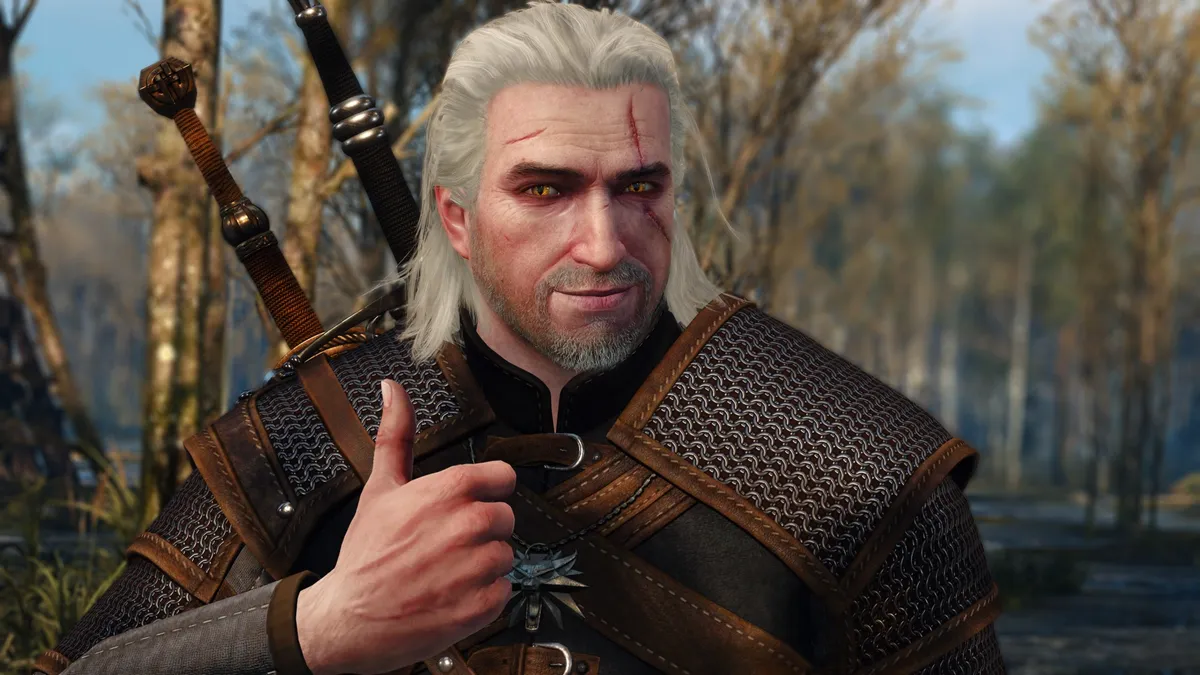
But I love New Vegas! And I'm so glad it got made. I often come back to an observation from videogame critic that the games of the always feel "generous." The potentially 90-plus-hour runtime of Dragon Quest 11 is almost never a slog—in fact, you can roll credits at the 60-hour mark and just keep going for a second, hidden ending.
At this point, I'm actually very optimistic that Larian and Bethesda will both pull it off.
A large videogame, most often an RPG, that feels "generous" in this way can feel like some kind of miracle. I'd bet a lot of people had that experience with Mass Effect 2, a game whose nonlinear, Seven Samurai-style posse assembly had the quality of one massive main quest— everything in that game is thrilling and essential. Two console generations earlier, Baldur's Gate 2 set the standard for adapting high-level D&D in a videogame, feeling like a tabletop campaign that would never end (in a good way, not in a "Steve, our cleric, never responds to scheduling texts so all our sessions are months apart" way).
Development teams with a lot of people, even more time, rare leadership, and , as we recently found out, can produce massive, generous games that earn their long runtimes like , Red Dead Redemption 2, Skyrim, or The Witcher 3. There are a few guys out there who made their own, personal, Baldur's Gate 2-style mondo RPGs with the Neverwinter Nights toolset, but is an ongoing project that started in 2008, is looking at a 2027 or '28 completion at the earliest, and the seems to have taken about 11 years to finish—quality vs quantity, you gotta compromise somewhere, and here it's development time, not to mention the limited production values of 2002's Aurora toolset.

At this point, I'm actually very optimistic that Larian and Bethesda will both pull it off, despite indulging in "You will bury your own grandchildren before you roll credits in this game!" marketing. Baldur's Gate 3's promise that it has a "more than twice the length of every season of Game of Thrones combined" made me wonder how they were counting—it seems to be inclusive of not just pre-rendered cinematics but all instances of characters talking in dialogue sequences—but otherwise had me feeling absolutely nothing. The promise passed through me unimpeded like X-Ray radiation or a particularly fibrous bran cereal.
Similarly, Starfield's bold is just… fine. Yeah man, I see those mountains, I know I can explore them. The track records of Larian and Bethesda, however, give me hope that Baldur's Gate 3 and Starfield will earn their runtimes. It makes me think of how quality RPG makers will often have overly edgy advertising that really undersells how sensitive and actually mature their games can be—the developers even in The Witcher 3.
Larian has already more than proven that it can make meaty, substantial RPGs with Divinity: Original Sin 2 and Baldur's Gate 3's lengthy early access first act. I see in Baldur's Gate 3 that promise of classic BioWare or CD Projekt, a game like Baldur's Gate 2 or The Witcher 3 that's just "oops, all main quest," this long unfurling of novelistic storytelling and well-designed combat encounters to tax the characters you've built.

With Starfield, I've been heartened by Bethesda's repeated insistence that the game will have more bespoke, handcrafted content than any of its previous games in addition to a vast galaxy of procedurally-generated worlds. 's concession in the quality vs quantity battle was a frustrating amount of procedurally-generated "radiant" quests that killed any enthusiasm I had left for visiting a bombed-out east coast again.
At their best, Bethesda games like Oblivion and Skyrim nail this combination of an immersive, other life rummy 365 simulation with meaningful storytelling underpinning it—I've always had trouble getting into stuff like Mount & Blade or Star Citizen, finding it too open ended. Bethesda's best games (and also I'd argue, Cyberpunk 2077 as well) rummy 51 introduce enough storytelling, character, and direction to contextualize and shape my roleplaying. With Starfield, I'm hoping for that Oblivion sense of "I could be anyone in this world, and it'll push back just enough for it to feel real."
So, essentially, long games are bad, except when they're not, and if you want to make one you should make sure to have about , infinite money, and at least one quest where you do something innocuous like or , then wake up somewhere crazy.
BetGuru9264
The variety of games is excellent, including table games like blackjack, roulette, and baccarat, in addition to slots. This keeps the platform interesting and allows me to switch games depending on my mood. The payout process is generally smooth and reliable, though occasionally it takes longer than expected. Overall, I feel confident that my winnings are safe and will be credited properly. I love the overall aesthetic of the platform. The animations, visual effects, and sound design make the gaming experience more dynamic and immersive. It's one of the reasons I keep coming back.
SlotWizard4657
The mobile interface is smooth and intuitive. I can play all my favorite slots on the go without experiencing any lag or glitches. The design is responsive and user-friendly, which makes gaming on my phone just as enjoyable as on my computer. Customer support has been outstanding whenever I had any issues. They respond quickly and professionally, ensuring that any concerns with deposits, withdrawals, or gameplay are addressed immediately, which makes me trust the platform more.
BetGuru754
The mobile interface is smooth and intuitive. I can play all my favorite slots on the go without experiencing any lag or glitches. The design is responsive and user-friendly, which makes gaming on my phone just as enjoyable as on my computer. The payout process is generally smooth and reliable, though occasionally it takes longer than expected. Overall, I feel confident that my winnings are safe and will be credited properly. Customer support has been outstanding whenever I had any issues. They respond quickly and professionally, ensuring that any concerns with deposits, withdrawals, or gameplay are addressed immediately, which makes me trust the platform more.